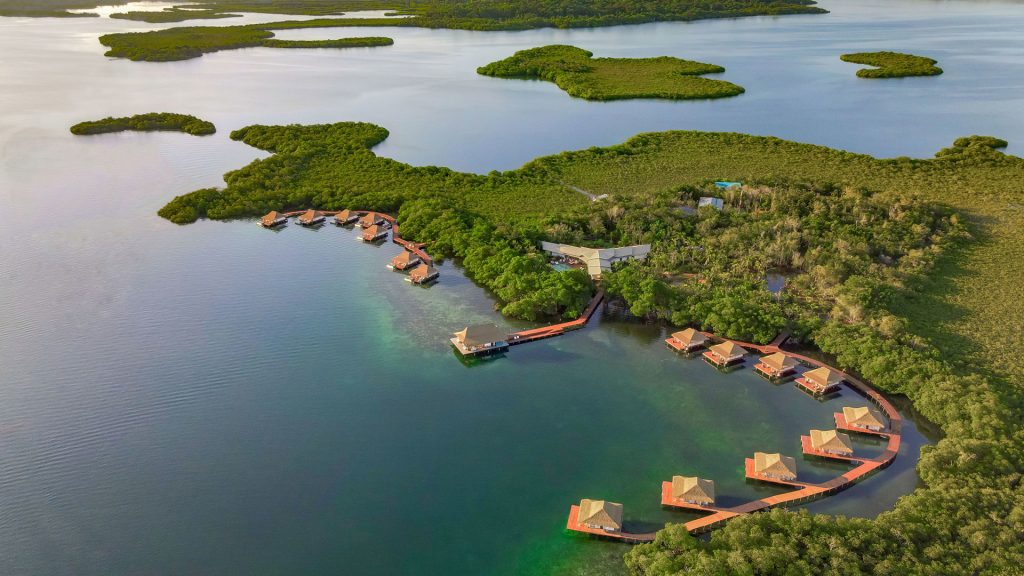
Guest post by Dan Behm, Founder of Nayara Bocas del Toro
Tell someone in the United States you’re vacationing in Panama and you might get a puzzled look. Not because they’ve heard anything bad — but because they’ve barely heard anything at all.
That’s interesting — because sometimes, right before a place becomes huge, it’s relatively unknown. In his bestselling book The Tipping Point, Malcolm Gladwell describes a tipping point as the moment of critical mass — the threshold, the boiling point. It’s that instant when something quietly building suddenly explodes into mainstream awareness.
Forty years ago, that moment arrived for Costa Rica. Tourism there hit a critical mass and never looked back. Visitor numbers nearly tripled between 1984 and 1995, transforming it into one of the world’s premier eco-destinations. Today, it feels like Panama might be next. The only question is: What will push it over the edge?
The Costa Rica Blueprint
Costa Rica’s rise wasn’t random. In the mid-1980s, several forces aligned: a strong eco-friendly identity, political stability, and growing global environmental awareness.
Suddenly, it wasn’t just an adventure destination — it became the destination for nature, sustainability, and “Pura Vida” living. That phrase — Pura Vida — did more than market the country. It gave Costa Rica an identity. A feeling. A shorthand for lifestyle, warmth, and nature. Panama hasn’t quite found its equivalent yet.
On Paper vs. In Reality
At first glance, Panama looks like a tourism powerhouse. Panama City is Central America’s major airline hub and a thriving business center. Luxury hotels line the skyline. The infrastructure is modern. But dig deeper and a different story emerges.
Many of those hotels cater primarily to business travelers. Ask U.S. travel agents where they send luxury vacationers, and Panama is still rarely top of mind. Consider this: Costa Rica has roughly 200 resorts charging over $400 per night. Panama has fewer than 30. That gap tells you something.
Yet something important has been happening — quietly.
The Luxury Signal
Over the past four years, Panama has entered a new era: true five-star, globally recognized luxury. Properties like La Compañía Hotel, Sofitel Legend Casco Viejo, Nayara Bocas del Toro, Isla Secas, and Isla Palenque. These aren’t just hotels. They’re statements. They signal to affluent travelers: Panama is safe. Sophisticated. Worth discovering.
Luxury tourism often acts as the early indicator of a tipping point. When high-net-worth travelers arrive — and when publications start writing about it — the masses tend to follow. Nayara Bocas del Toro alone has generated extraordinary international coverage in outlets like The New York Times, Bloomberg, Condé Nast Traveler, and Travel + Leisure and over one hundred others. Not paid ads. Editorial coverage. The resort was voted number one in Central America by Condé Nast Traveler in 2025 and was awarded two Michelin Keys.
That kind of exposure doesn’t just promote a resort — it places a country on the map.
Why Panama Has the Ingredients
Panama already offers a powerful combination: political stability, safety for travelers, hurricane-free geography, U.S. dollar currency, just three hours from Miami, same time zones as much of the U.S., vast untouched nature, two oceans, one canal, strong eco-tourism potential, real estate investment opportunity, and a seamless blend of adventure and luxury. On paper and in photography, it looks inevitable. But one crucial ingredient is still missing.
The Missing Piece: Identity
Costa Rica has Pura Vida.
Virginia has “Virginia is for Lovers.”
Michigan has “Pure Michigan.”
Each of these campaigns didn’t just attract tourists — they created pride. They reshaped perception. Panama doesn’t yet have a phrase that captures its essence in a simple, emotional way — and that’s one of the essential ingredients in creating tipping points.
A Thought Experiment: “Panama. Perfectly Wild.”
What if the slogan were “Perfectly Wild”? It competes well because it’s short, rhythmic, and nature-forward — but more luxury-flexible. It feels more curated and upscale. The campaign positions Panama as the luxury destination that delivers immersive natural wonder, culture, and refinement, unlike anywhere else in the world.
It’s scalable across campaigns: Perfectly wild islands. Perfectly wild rainforests. Perfectly wild cuisine. Perfectly wild nights in the city.
The Strategy to Reach Critical Mass
Reaching a tipping point is part luck, part strategy. A slogan alone isn’t enough. It needs research-driven messaging aimed at U.S. travelers, a focused test campaign in one U.S. city, multi-year consistency, and a cohesive national rollout. And yes — the iconic Panama hat should absolutely be part of the imagery. It’s instantly recognizable, emphasizes timeless elegance, and is uniquely tied to the country’s global identity.
So… Is the Tipping Point Near?
Luxury is arriving. Press coverage is growing. Travelers are looking for “the next Costa Rica.” Panama has natural and strategic advantages few countries can match. It feels close. Maybe very close. If the right identity emerges — and the marketing aligns with the moment — the floodgates could open. And when they do, people may look back and say: “That’s when it tipped.”